
A Frustrating Problem That's More Common Than You Think
You press the button on your garage door remote, the door starts its descent, and then — just before it reaches the floor — it stops and reverses right back up. You try again. Same thing. Maybe it works on the third attempt, maybe it doesn't. Either way, you're left standing in your driveway wondering what's going on.
This is one of the most common garage door complaints we hear from homeowners in Dana Point, and the good news is that it's almost always fixable. The tricky part is that several different issues can cause the same symptom. Let's walk through the most likely culprits so you can understand what's happening and know when it's time to call a professional.
Safety Sensors Are Misaligned or Dirty
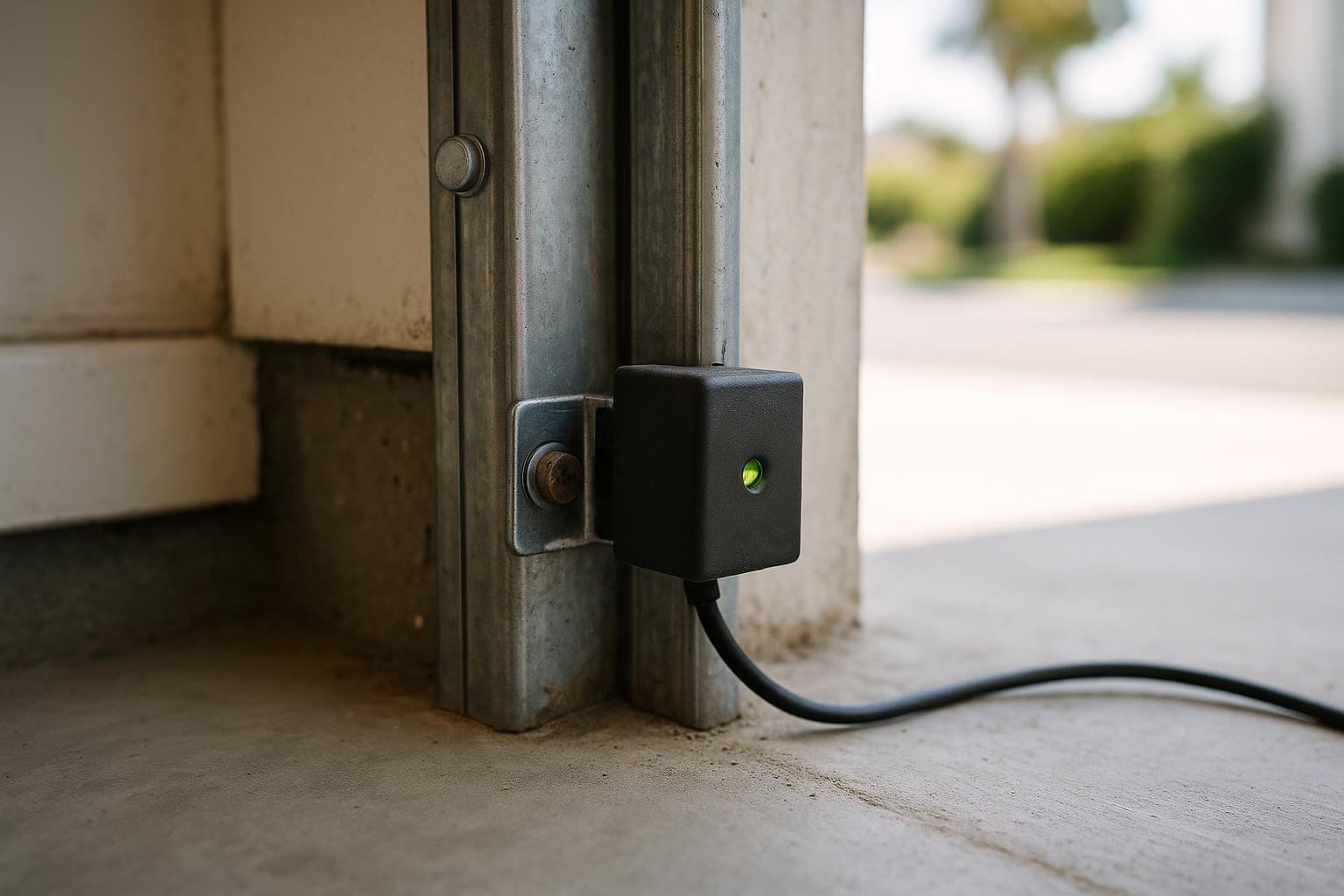
Modern garage doors are equipped with photoelectric safety sensors — small devices mounted near the bottom of the door tracks on either side. These sensors send an invisible beam across the opening, and if anything breaks that beam while the door is closing, the system automatically reverses the door to prevent injury or damage.
This is the number one reason garage doors reverse before reaching the ground. Here's what to check:
- Alignment: If one sensor gets bumped — by a bike, a trash can, or even a broom leaning against it — the beam can't connect with the other sensor. Most sensors have a small LED light that glows steady green when aligned and blinks when they're not.
- Dirt and debris: Living near the coast in Dana Point means salt air, dust, and moisture can build up on sensor lenses over time. A quick wipe with a soft cloth can sometimes solve the problem instantly.
- Sun interference: In the late afternoon, direct sunlight hitting a sensor can overwhelm the infrared beam and trick the system into thinking something is blocking the path. This is especially common with west-facing garages along the South Orange County coast.
- Wiring issues: The thin wires connecting sensors to the opener can fray, get pinched, or come loose from their terminals. If cleaning and realigning doesn't help, damaged wiring could be the cause.
The Close-Force Setting Needs Adjustment
Your garage door opener has adjustable force settings that control how much power the motor uses to open and close the door. If the close-force setting is too low, the opener interprets normal resistance — like the weight of the door itself or slight friction in the tracks — as an obstruction and reverses.
This can happen after a spring replacement, a change in weather, or simply as components wear over time. Most openers have small adjustment dials or screws on the back or side of the motor unit. However, adjusting these settings requires a careful touch. Setting the force too high can create a safety hazard, as the door won't reverse when it actually should. If you're not comfortable making this adjustment yourself, it's best to have a technician handle it.
Something Is Wrong with the Tracks
Garage door tracks guide the door's movement, and even small problems can cause the door to bind, stick, or meet enough resistance to trigger a reversal. Common track issues include:
- Bent or dented tracks: A minor impact can create a dent that catches the rollers as the door moves down.
- Debris in the tracks: Small rocks, leaves, or even hardened grease can obstruct smooth movement.
- Misaligned tracks: Over time, the brackets holding the tracks to the wall can loosen, causing the tracks to shift out of their proper position.
You can visually inspect your tracks by looking for obvious bends, gaps between the track and the wall, or anything stuck in the channel. Minor debris can be cleared with a rag, but bent tracks or alignment issues should be handled by a professional to avoid making the problem worse.
Worn or Broken Springs Are Creating Imbalance
Garage door springs bear the heavy lifting — literally. They counterbalance the weight of the door so the opener motor doesn't have to do all the work. When springs wear out or break, the door becomes significantly heavier for the opener to move. The motor may start closing the door but struggle against the extra weight, interpret it as an obstruction, and reverse.
Signs that your springs may be the issue include:
- The door feels unusually heavy when you try to lift it manually
- The door slams down quickly when you disconnect the opener
- You notice a visible gap in one of the torsion springs above the door
- You heard a loud bang from the garage — this is often the sound of a spring snapping
Spring replacement is not a DIY job. These components are under extreme tension and can cause serious injury if handled incorrectly. This is one repair that always warrants a call to an experienced garage door technician.
The Opener's Logic Board May Be Failing
If you've checked the sensors, tracks, springs, and force settings and the door still reverses, the problem might be electronic. The logic board inside your garage door opener is essentially its brain, and like any circuit board, it can develop faults over time. Power surges — which can happen during coastal storms — are a common cause of logic board failure in Dana Point homes.
Symptoms of a failing logic board can mimic other problems: random reversals, unresponsive remotes, or the opener running without the door moving. A technician can diagnose whether the board needs replacement or if a full opener upgrade makes more sense, especially if your unit is more than 10 to 15 years old.
When to Call a Professional
Some of these fixes are simple enough to try on your own — cleaning sensors, clearing debris from tracks, or checking for obvious obstructions. But if the problem persists after basic troubleshooting, or if you suspect spring, track, or opener issues, professional diagnosis saves you time, money, and the risk of injury.
At Dana Point Garage Door, we troubleshoot reversing doors regularly for homeowners across Dana Point, Laguna Niguel, San Clemente, and the surrounding communities. We'll identify the root cause, explain your options clearly, and get your door closing properly — usually in a single visit.
Don't Ignore a Reversing Garage Door
A garage door that won't close all the way isn't just an inconvenience — it's a security risk. An open garage is an invitation for theft, pests, and weather damage. It also means your garage door's safety system may not be functioning correctly, which puts your family at risk.
If your door has started reversing and you can't figure out why, give us a call. We offer prompt service throughout South Orange County and can usually schedule same-day or next-day appointments. The sooner you address the issue, the simpler and less expensive the fix tends to be.