
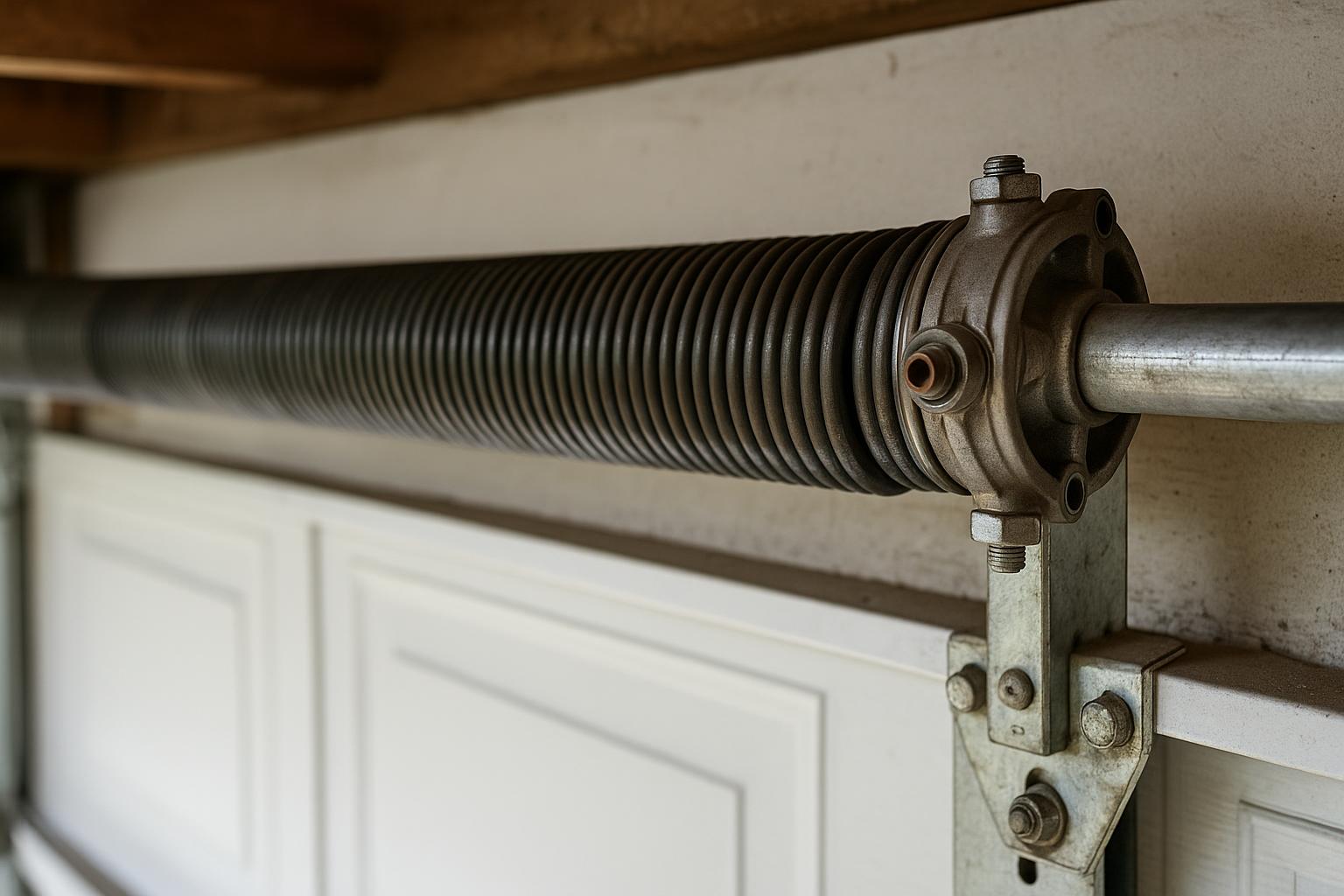
Your Garage Door Springs Are Doing More Work Than You Think
Most homeowners in Dana Point don't think much about their garage door springs — until something goes wrong. But those tightly wound coils mounted above or alongside your garage door are the real workhorses of the entire system. They counterbalance the full weight of the door (often 150 to 250 pounds or more), making it possible for your opener — or your own arms — to lift it with minimal effort.
When springs wear out or break, your garage door can become dangerously heavy, refuse to open, or slam shut without warning. Knowing the signs of failing springs helps you act before a small issue turns into an emergency. Here's what to watch for and what to do about it.
How Garage Door Springs Work
There are two main types of garage door springs, and most homes along the South Orange County coast use one or the other:
- Torsion springs — Mounted on a metal shaft above the garage door opening. They wind and unwind to lift and lower the door. Torsion springs are the most common type in modern residential installations.
- Extension springs — Mounted along the horizontal tracks on either side of the door. They stretch and contract as the door moves. These are more common in older homes and lighter doors.
Both types are under extreme tension and have a limited lifespan, typically rated for around 10,000 cycles. One cycle equals one full open-and-close. If your household opens and closes the garage door four times a day, that's roughly seven years of use before the springs reach the end of their expected life.
Warning Signs Your Springs Are Failing
1. The Door Feels Heavier Than Usual
Try this simple test: disconnect your garage door opener by pulling the manual release handle, then lift the door by hand. A properly balanced door with healthy springs should lift smoothly and stay open about three to four feet off the ground. If the door feels unusually heavy or drops the moment you let go, your springs are likely losing tension.
2. The Door Opens Unevenly or Crooked
If one side of your garage door rises faster than the other, it often means one spring has weakened or broken while the other is still functional. This puts uneven stress on the tracks, cables, and opener, which can cause additional damage if left unaddressed.
3. You Hear a Loud Bang From the Garage
A broken torsion spring releases its stored energy all at once, producing a loud bang that many Dana Point homeowners mistake for something falling off a shelf or even a minor earthquake. If you heard a sudden loud noise from your garage and now the door won't open, a snapped spring is the most likely culprit.
4. There's a Visible Gap in the Spring
Take a look at the torsion spring above your garage door. An intact spring is a continuous, tightly wound coil. If you see a gap of an inch or two somewhere along the coil, the spring has broken and needs to be replaced immediately.
5. The Opener Struggles or Stops Mid-Cycle
Your garage door opener is designed to move a balanced door, not to do all the heavy lifting on its own. When springs fail, the opener has to work much harder. You might notice it straining, moving the door more slowly, or stopping partway through the cycle. Continuing to run the opener under these conditions can burn out the motor.
6. Cables Are Loose or Hanging
The lift cables on either side of your garage door work in tandem with the springs. When a spring breaks, the cables can lose tension and become slack or even unwind from their drums. Loose cables are a clear visual indicator of a spring problem.
Why You Shouldn't Replace Garage Door Springs Yourself
We understand the DIY spirit — it's tempting to save money and handle things on your own. But garage door springs are one of the few home repairs where the risks genuinely outweigh the savings. Here's why:
- Extreme tension: Torsion springs are wound under tremendous force. Improper handling can cause the spring or winding bar to release suddenly, leading to serious injury.
- Specialized tools required: Proper spring replacement requires winding bars, vice grips, and precise calibration. Standard household tools won't do the job safely.
- Matching specifications: Springs must be matched to the exact weight and size of your door. Installing the wrong spring leads to poor balance, premature wear, and potential damage to the entire system.
Professional technicians have the training, tools, and experience to replace springs safely and correctly. It's one of the most common service calls we handle for homeowners in Dana Point, Laguna Niguel, and San Juan Capistrano, and it typically takes under an hour.
Should You Replace One Spring or Both?
If one spring has broken, the other one has the same amount of wear and is likely close to failing too. We almost always recommend replacing both springs at the same time. Here's why that makes sense:
- Both springs were installed at the same time and have the same number of cycles on them.
- Replacing both ensures even balance and smooth operation.
- The labor cost is the same whether we replace one or two — you're only paying for the additional part.
- It prevents a second service call in a few weeks or months when the other spring inevitably breaks.
How Long Do New Springs Last?
Standard garage door springs are rated for approximately 10,000 cycles. However, high-cycle springs rated for 25,000 or even 50,000 cycles are available and worth considering if you use your garage door frequently. The coastal climate here in Dana Point can also affect spring longevity — salt air accelerates corrosion on metal components, so regular lubrication and maintenance go a long way toward extending the life of your springs.
Preventive Maintenance Makes a Difference
You don't have to wait for a spring to snap to take action. A few simple habits can help your springs last longer:
- Lubricate the springs every three to four months with a silicone-based garage door lubricant. This reduces friction and helps prevent rust, which is especially important in coastal areas like Dana Point and Laguna Beach.
- Schedule annual maintenance. A professional tune-up includes inspecting springs, cables, rollers, and hardware for wear — catching small problems before they become expensive repairs.
- Listen and observe. Squeaking, grinding, jerky movement, or any change in how your door operates is worth investigating sooner rather than later.
When to Call a Professional
If you've noticed any of the warning signs above — a heavy door, a visible gap in the spring, loose cables, or your opener struggling — it's time to call for service. A broken or failing spring won't fix itself, and continuing to operate the door in that condition risks damaging the opener, tracks, or cables.
At Dana Point Garage Door, we handle spring replacements throughout Dana Point, San Clemente, Mission Viejo, and the surrounding communities. We carry a range of spring sizes on our trucks so most repairs can be completed in a single visit. If your garage door isn't working the way it should, give us a call and we'll get it back on track — safely and quickly.